
Map the system
Identify known drain, sump, outlet, and problem areas.
Foundation drainage is meant to relieve water around the footing. When it is blocked, damaged, poorly connected, or overwhelmed, water may show up at the wall-floor joint or collect beneath the slab.
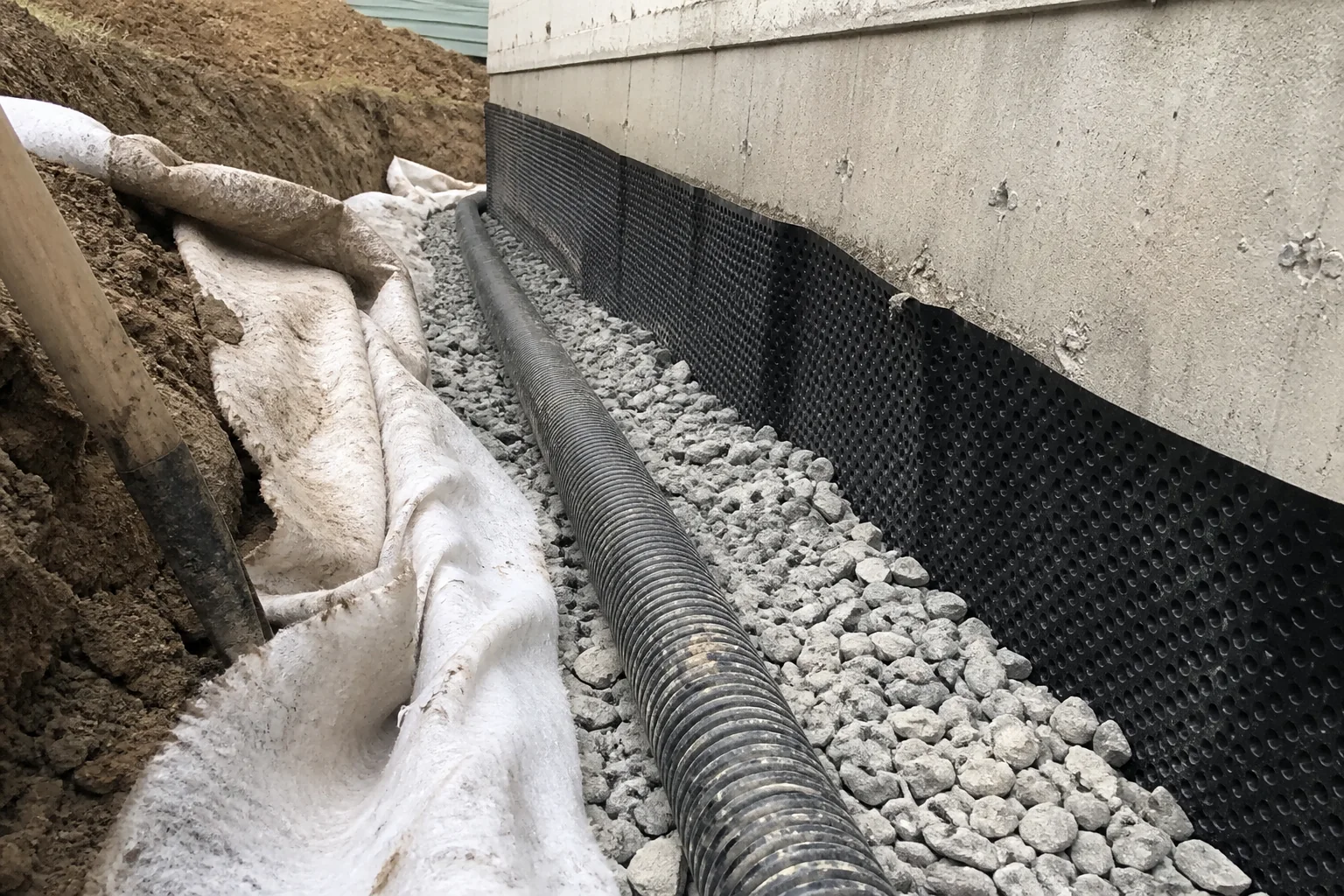 REPRESENTATIVE IMAGE / WEEFoundation drainage
Foundation drainage is meant to relieve water around the footing. When it is blocked, damaged, poorly connected, or overwhelmed, water may show up at the wall-floor joint or collect beneath the slab.
Drainage path explained
Interior and exterior access compared
Sump connection and discharge reviewed
+Recurring perimeter seepage
+Old clay or unknown drain system
+Water during prolonged rain
+Sump pit stays dry while the basement leaks
Take photos when it is safe. Never enter water near electrical equipment.Identify known drain, sump, outlet, and problem areas.
Assess likely blockage, separation, capacity, or connection issues.
Recommend a repair route and verify movement to the collection point.
Specific product, warranty, price, and schedule details are confirmed in the written scope.
That is the purpose of the basement assessment. The visible leak is not always the source, so the assessment looks at drainage, grading, foundation entry points, the sump system, and when the problem occurs before a repair is recommended.
Yes. The proposed repair should identify the area being addressed, the system or materials recommended, what is included, and any warranty terms. Final warranty details must be confirmed by the business owner before publication.
Yes. Photos of the leak area, foundation wall, sump pit, discharge line, and the outside grade can help the assessor prepare, but an on-site visit may still be needed to identify the cause.