
Confirm suitability
Rule out simpler surface, plumbing, and crack-specific causes first.
An interior system can collect water entering at or below the footing and direct it to a sump. It can be a practical choice when exterior excavation is inaccessible or when the drainage problem extends along a larger perimeter.
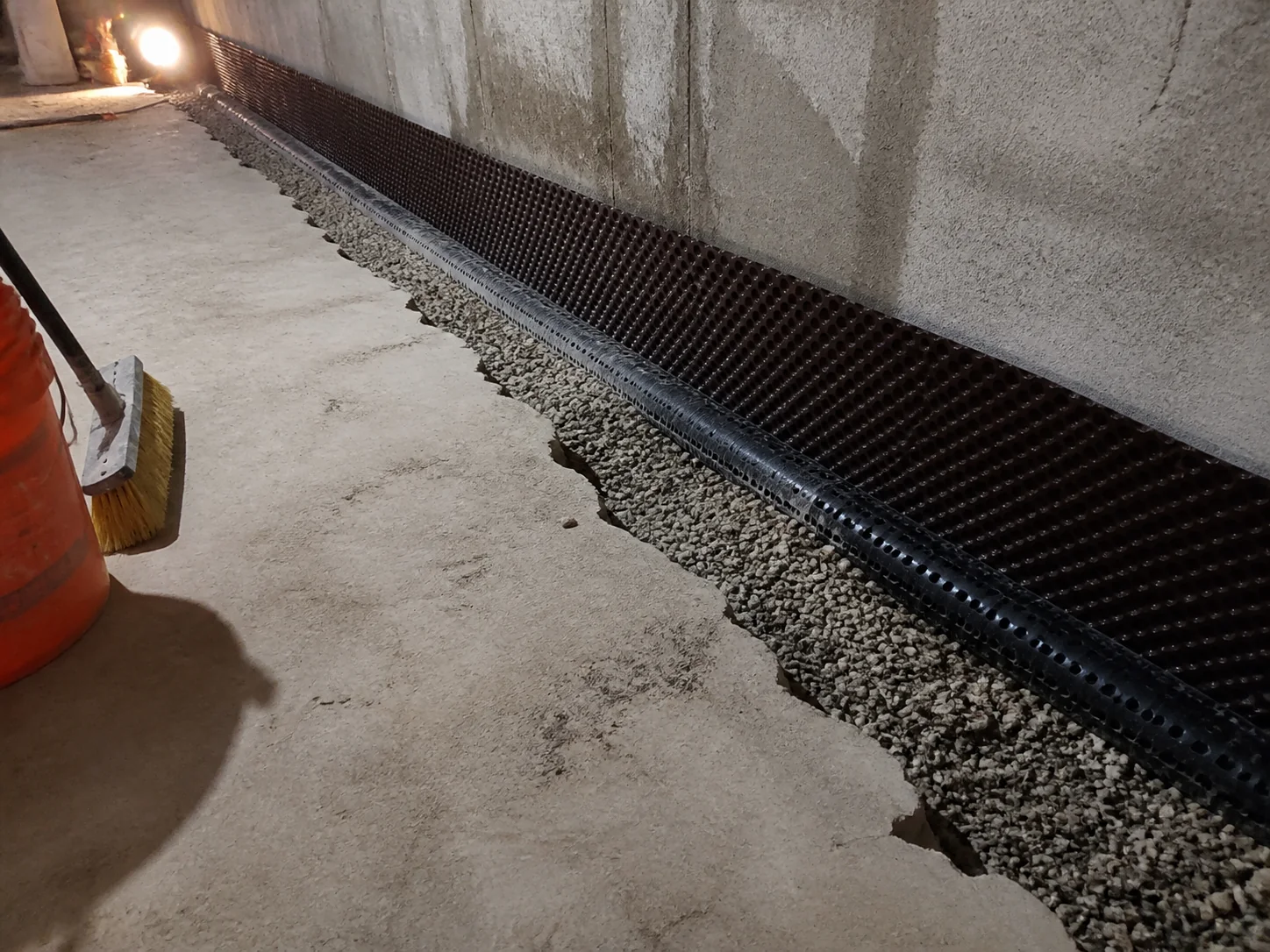 REPRESENTATIVE IMAGE / INTInterior drainage
An interior system can collect water entering at or below the footing and direct it to a sump. It can be a practical choice when exterior excavation is inaccessible or when the drainage problem extends along a larger perimeter.
Water is directed to a controlled outlet
Can avoid full exterior excavation
Service points remain accessible
+Water along multiple wall sections
+Seepage at the wall-floor joint
+Exterior access is limited
+Existing drainage is no longer effective
Take photos when it is safe. Never enter water near electrical equipment.Rule out simpler surface, plumbing, and crack-specific causes first.
Open the agreed area and connect drainage to the collection system.
Seal the work area, test flow, and review future access points.
Specific product, warranty, price, and schedule details are confirmed in the written scope.
That is the purpose of the basement assessment. The visible leak is not always the source, so the assessment looks at drainage, grading, foundation entry points, the sump system, and when the problem occurs before a repair is recommended.
Yes. The proposed repair should identify the area being addressed, the system or materials recommended, what is included, and any warranty terms. Final warranty details must be confirmed by the business owner before publication.
Yes. Photos of the leak area, foundation wall, sump pit, discharge line, and the outside grade can help the assessor prepare, but an on-site visit may still be needed to identify the cause.